
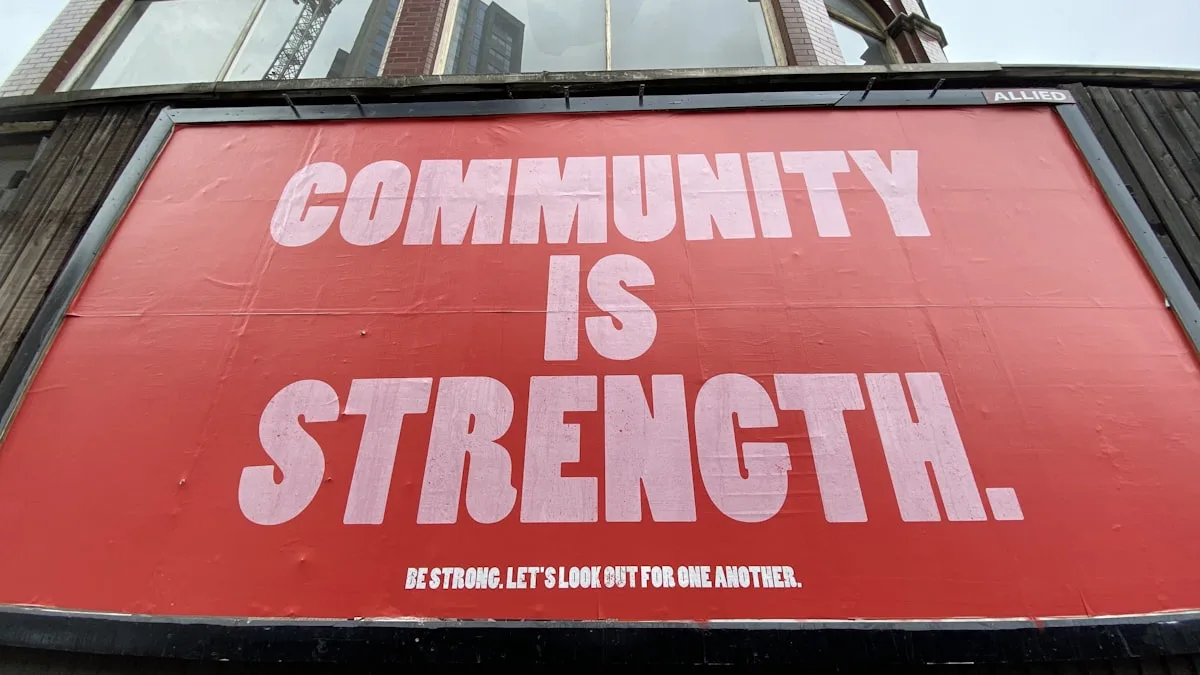
In brief: Community involvement small business owners treat as optional can generate real commercial returns when structured well. The key is choosing initiatives that connect directly with your customers, not ones that simply look good on a press release.
Community involvement small business owners tend to dismiss as a nice-to-have rarely see the full picture. Done properly, it generates measurable commercial returns alongside whatever warm feeling it produces in the local press.
I want to be honest here, though: I have seen plenty of small businesses sponsor a roundabout or hand a cheque to a foodbank and receive precisely nothing in return beyond a framed certificate they put in the back office. The activity looked right but was structured badly, with no thought given to whether it would actually connect with their customers or build anything lasting. That is the version of community engagement worth avoiding. The other version is worth understanding properly.
Why community involvement small business strategy differs from corporate CSR
Large companies run corporate social responsibility programmes because their legal, communications and HR departments expect them to. The commercial logic is diffuse and often secondary. For a small business, the logic has to be tighter, because you are spending real money from a limited budget and your name is directly attached to whatever you do.
That proximity is actually an advantage. When a local solicitor sponsors a junior football team, every parent on that touchline knows who paid for the kit. When a national insurance brand does the same thing at scale, the connection is abstract. Small businesses have a specificity that corporate giving programmes cannot replicate, and that specificity is where the commercial case lives.
The difference, then, is not about virtue. It is about mechanics. An SME’s community activity sits closer to its actual customers, which means the feedback loop is shorter and the returns, when they come, are more traceable.
The real local sponsorship benefits for an SME
Sponsorship gets a bad reputation because it is usually evaluated on visibility rather than on relationship quality. Visibility is easy to measure and almost entirely meaningless on its own. A logo on a banner at a village fete tells nobody anything useful about your business.
What sponsorship actually buys, when it is structured well, is repeated contact with a relevant audience in a context where they are relaxed and receptive. That is a genuinely different proposition from an advert. People at a community event are not trying to skip past you. They are there willingly, which changes the nature of the interaction entirely.
The local sponsorship benefits that tend to stick are tied to participation, not just presence. Sponsoring a charity quiz night where your staff actually attend, run a table, and talk to people is worth considerably more than having your name on the programme. The cost is similar. The return is not.
Charity partnerships for business: what works and what wastes money
Charity partnerships for business work when there is a genuine overlap between what the charity needs and what the business can offer without it feeling contrived. A local accountancy firm partnering with a charity that runs financial literacy workshops for unemployed adults is a coherent fit. The same firm sponsoring a dog rescue is not incoherent, but it requires much more work to make the connection feel real to customers.
The partnerships that tend to generate the most reputational value are long-term ones. A single donation produces a press release. Three years of consistent support produces a reputation. The distinction matters because customers notice sustained commitment in a way they simply do not notice one-off gestures.
There is also a staff dimension that often gets overlooked. Businesses that give employees paid time to volunteer with a partner charity consistently report higher retention and engagement than those that do not. The effect is not enormous, but it is real, and it sits on top of whatever community benefit the activity produces.
Building a community engagement strategy that has commercial logic
A community engagement strategy for a small business does not need to be a document. It needs to answer four questions: who are we trying to reach, where do those people already gather, what can we offer that is genuinely useful, and how will we know if it is working?
The last question is the one most businesses skip. They treat community activity as inherently unquantifiable, which then makes it easy to cut when budgets tighten. If you decide in advance that success means five new client conversations at an event, or a ten per cent increase in referral enquiries over six months, you have something to evaluate against. Vague goodwill is not a metric.
Referrals are worth thinking about carefully here. Community involvement tends to accelerate referral networks because it puts you in front of people who already trust the context you are operating in. A business owner who is known to coach local youth sport, run a charity raffle, or sit on a neighbourhood committee is being seen repeatedly by people who share values. That visibility converts into referrals at a higher rate than cold advertising, because trust is already partially established before the commercial conversation begins.
Choosing the right level of commitment
Not every business has the capacity to run a major community programme. That is fine. The mistake is over-committing publicly and then quietly fading out, which does more reputational damage than never having started. A smaller, sustained commitment to one initiative beats a splashy launch followed by nothing.
Think in terms of what you can realistically maintain for two years without it becoming a burden. That tends to produce a more honest answer than thinking about what looks impressive in a press release.
The reputational case, honestly assessed
Community involvement does generate reputational benefit, but it is slower and less dramatic than most businesses hope. The idea that a sponsorship will produce a wave of new customers in the following quarter is almost always wrong. The mechanism is more like compound interest: small deposits of goodwill that accumulate over time and pay out when a customer is choosing between two otherwise similar businesses.
That accumulation also provides a degree of resilience. A business that is known and liked in its community has a buffer when things go wrong. Complaints tend to be handled differently by people who already think well of you. That is not a reason to avoid accountability, but it is a real and underappreciated advantage of consistent community presence.
The uncomfortable truth is that community involvement only produces reputational returns when people can actually see it. Not through paid advertising, but through the ordinary social visibility that comes from being present in the places your customers spend time. If your activity is invisible to the people you want to reach, the reputational case collapses entirely, however genuine the motivation.
Frequently asked questions
How much should a small business spend on community sponsorship?
There is no universal figure, but a useful starting point is to think of community activity as a line in your marketing budget rather than a charitable donation. Many SMEs find that one to three per cent of turnover is a workable range, though what matters more than the amount is whether the spend is directed at activities where your customers are actually present.
How do you measure the return on community involvement?
Set specific, observable indicators before you commit. These might include the number of referral enquiries that mention the activity, new contacts made at events, or staff retention data over the period of a partnership. You will not capture everything, but having any metric is better than having none, because it forces a more honest evaluation of whether the activity is working.
Is there a risk that community involvement looks insincere?
Yes, and it is a genuine risk rather than a hypothetical one. Activity that is transparently self-promotional, inconsistent, or disconnected from what the business actually does tends to produce cynicism rather than goodwill. The best protection against this is choosing partnerships that make obvious sense and sticking with them long enough that the commitment becomes self-evident.
Key points to keep in mind
- Community activity produces commercial returns through relationship quality and referral networks, not through logo visibility alone.
- Long-term partnerships generate more reputational value than one-off donations or single-event sponsorships.
- Staff involvement in community activity tends to improve retention and engagement, which is a separate but real benefit.
- Decide how you will measure success before you commit, not after the activity has finished.
- Choose a level of commitment you can sustain for at least two years without it becoming a drain on the business.
The businesses that get the most from community involvement are not necessarily the most generous. They are the ones that are clearest about why they are doing it and consistent enough for people to actually notice.
If you need help turning these ideas into clear priorities and an actionable direction, explore our Business Strategy service.