Most projects in small businesses get delivered without a dedicated project manager, and the ones that fail rarely do so because of missing Gantt charts. They fail because nobody owns the decisions, the timeline drifts, and accountability gets politely avoided until it is too late.
Running projects without a project manager is not a compromise. For most SMEs and small teams, it is simply the reality, and the good news is that a few well-chosen habits can do most of the structural work that a formal PM role would otherwise provide. You do not need certification or specialist software. You need clarity, rhythm, and someone willing to hold the line when things slip.
Running projects without a project manager: what actually has to change
The honest version of project management comes down to four things: knowing what needs to happen, knowing who is doing it, knowing when it should be done, and having a way to notice when any of those three are drifting. A project manager spends most of their time on exactly this. Without one, those responsibilities do not disappear. They just need somewhere to land.
The most common mistake I see is assigning work to a team rather than a person. ‘The marketing team will handle the copy’ is not an assignment. It is a way of ensuring that everyone assumes someone else is doing it. Every task needs a named owner, and that owner needs to know they are accountable for it, not just involved with it.
The second shift is accepting that someone in the team needs to take on a coordinating role, even informally. It does not need to be a full-time responsibility. An hour a week of deliberate oversight is enough for most small projects. The key word is deliberate.
Lightweight project management: keeping the structure simple enough to actually use
Lightweight project management is not about doing less planning. It is about doing the planning that matters and skipping the rest. A ten-page project initiation document for a four-week website update is not rigour; it is procrastination wearing a professional disguise.
Start with a single reference document. It does not need to be elaborate: a project name, a one-sentence goal, a list of deliverables with owners and due dates, and a short list of known risks. Keep it somewhere everyone can see it. A shared Google Doc, a Notion page, a printed sheet on the wall. The format is less important than the habit of updating it.
One thing that genuinely improves outcomes is writing down what ‘done’ looks like before you start. Not in abstract terms, but specifically. If the deliverable is a new onboarding process, does ‘done’ mean the document is written, tested with a real new starter, and signed off by a manager? Those are three different finish lines, and assuming the team shares the same one is a reliable source of late-stage friction.
Project planning without PM training: a practical approach
Formal project planning methodology can feel inaccessible if you have never been trained in it, but the core logic is straightforward. Work backwards from the deadline, identify the dependencies (the tasks that cannot start until another is finished), and make sure those are sequenced correctly. Everything else is detail.
- Write down every task you can think of. Do not filter yet. Include the small things, because small things have a way of taking longer than expected and blocking larger ones.
- Identify which tasks depend on others. A task that cannot start until something else finishes is a dependency. Note these explicitly.
- Assign a realistic time estimate to each task, and then add a small buffer. If the honest estimate is two days, put three. Not because the person cannot do it in two, but because unplanned things happen.
- Assign an owner to every task. One name, not a role, not a team.
- Set a review point midway through the project, not just at the end. A check-in at the halfway mark catches drift early enough to correct it.
This is not a project management methodology. It is common sense, written down. The writing-down part is what most teams skip, and it is the part that matters most.
Project tracking for small teams: visibility without overhead
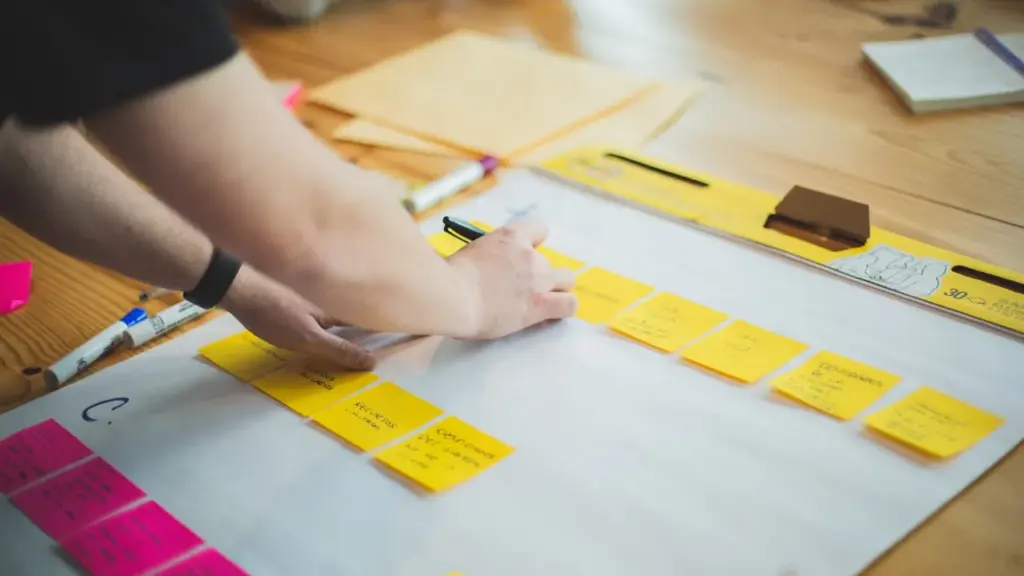
Tracking does not require a dedicated tool, though a simple one helps. Trello, Asana, and Monday are all usable for small teams, and all have free tiers. If the team is genuinely resistant to new software, a shared spreadsheet with columns for task, owner, due date, and status (not started, in progress, done, blocked) covers most of what you need.
The discipline is in the updates, not the tool. A tracking board that nobody updates is worse than no tracking board, because it creates false confidence. Build a short weekly check-in into the team’s rhythm. Fifteen minutes, every Monday, with everyone updating their own items before the meeting starts. This is small enough that people will not resist it, and consistent enough to catch problems before they compound.
‘Blocked’ is the most important status on any tracking board. A task that is stuck but marked as ‘in progress’ is invisible. A task marked as ‘blocked’ is a visible problem that demands a response. Encourage people to use it without embarrassment.
Accountability without a formal structure
This is where most informal project management falls apart. Without a PM, there is no natural person to chase overdue work. The instinct, particularly in close-knit teams, is to avoid the conversation. Deadlines drift, nobody quite says anything, and the project arrives late with a vague sense that nobody was really to blame.
The fix is to make accountability explicit at the start, not when things go wrong. When someone takes on a task, agree what happens if it slips. Not as a threat, but as a practical matter: if the copy is not ready by Thursday, does the designer push the layout, or hold? Who needs to know? What is the escalation path? Having that conversation once, early, removes the awkwardness of having it under pressure later.
One approach that works well in smaller teams is a short weekly written update from each owner. Two sentences: what they completed last week, and what they are doing this week. It takes three minutes to write and creates a record without requiring a meeting. It also makes it harder to quietly let things slide, because the gap becomes visible in the update history.
Frequently asked questions
What is the biggest risk of running a project without a project manager?
The biggest risk is not missing tools or process; it is diffused accountability. When no single person owns the project’s success, individual tasks get done but the whole can still fail. Assign a project lead, even informally, and give that person the authority to make decisions and escalate problems.
How much time should a team lead spend on project coordination?
For a typical small project running four to eight weeks, one to two hours a week of deliberate coordination is usually enough. That means reviewing the task board, running a short check-in, and dealing with any blockers. The time balloons when problems are left unaddressed, so front-loading attention saves time later.
Do we need project management software?
Not necessarily. A well-maintained spreadsheet can handle most project tracking for small teams. The argument for a dedicated tool is that it is easier to visualise dependencies and status at a glance, and easier to update on mobile. If the team will use it, it helps. If the team will not use it, it is just another abandoned tab.
How do you keep a project on track when everyone has a day job?
Realistic time estimates are the first part of the answer. Project tasks almost always take longer than expected when added on top of regular work. Build that in from the start. The second part is protecting the weekly check-in as a non-negotiable slot. Even fifteen minutes of shared visibility prevents the kind of quiet drift that takes weeks to recover from.
The practical short version
- Name a project lead, even if it is informal. Shared ownership is no ownership.
- Write down what ‘done’ looks like before any work starts.
- Use a single reference document with tasks, owners, and due dates.
- Hold a short weekly check-in with a written update from each owner.
- Use ‘blocked’ as a status, and treat it as a request for help rather than an admission of failure.
- Agree the escalation path at the start, not when things slip.
The question worth sitting with is this: in the last project that went sideways, was the problem a lack of process, or a lack of someone willing to say ‘this is off track’ early enough for it to matter?