
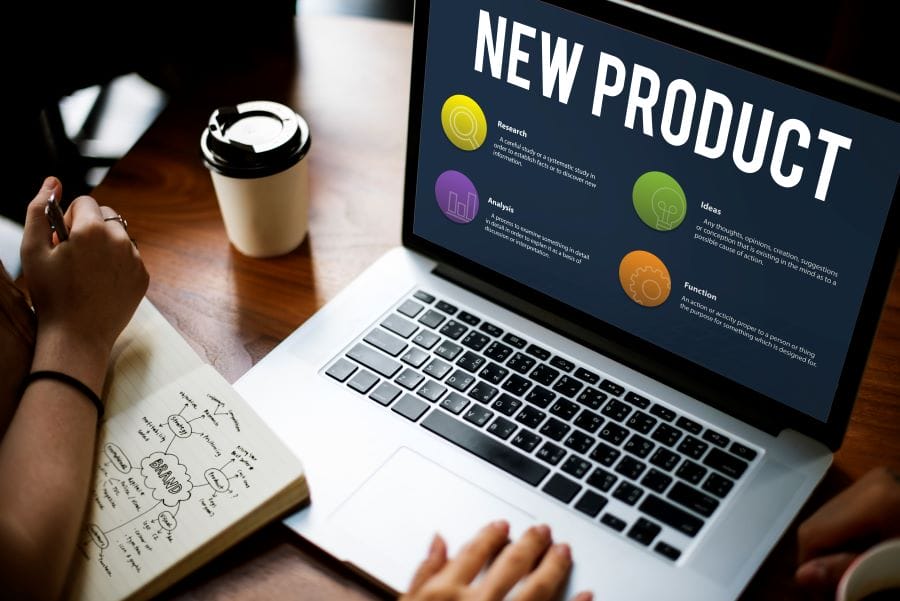
In brief: To promote a new product or service, define the customer and problem, test the proposition with a small audience, choose channels that fit the buying decision and make the customer journey ready before increasing spend. Set commercial measures and decision thresholds in advance so the business can scale, revise or pause using evidence.
What does product or service promotion involve?
Promotion is the work of making a relevant audience aware of an offer and helping suitable buyers decide whether to act. It can include content, direct outreach, email, search, advertising, public relations, partnerships, events, demonstrations and referrals. The right mix depends on the customer, the buying process, the available evidence and the business’s ability to deliver.
Promotion is not a substitute for a clear offer. If the customer, problem, outcome or price is uncertain, a larger campaign may simply expose those uncertainties to more people. Start by strengthening the commercial proposition, then use promotion to test and communicate it.
This guide owns the practical launch and promotion process. For the wider system of customer research, positioning, channels, delivery and measurement, use G&G’s marketing framework for SMEs.
Product promotion and service promotion are not identical
A product can often be demonstrated, sampled, compared or delivered in a repeatable form. A service may depend more heavily on trust, scope, expertise, availability and a clear explanation of what happens after an enquiry.
| Question | Product | Service |
|---|---|---|
| What can the buyer assess? | Features, use, quality, price, availability and delivery | Problem fit, approach, scope, expertise, responsibilities and expected process |
| Useful proof | Demonstration, specification, test evidence, sample or transparent comparison | Clear method, credentials, defined deliverables, verified reviews or appropriately evidenced examples |
| Typical friction | Switching, stock, delivery, compatibility or perceived risk | Trust, unclear scope, time commitment, access to people or uncertainty about the outcome |
| Next step | Purchase, trial, sample, pre-order or demonstration | Qualified enquiry, diagnostic conversation, proposal or scoped pilot |
These are general distinctions, not fixed rules. A complex product can have a long consultative sale, while a standardised service can be purchased quickly. Design the promotion around the real decision rather than the label.
1. Define the audience, problem and proposition
Write a short statement covering:
- the specific customer or buying group;
- the situation that creates the need;
- the problem, cost or risk they recognise;
- the outcome the offer is designed to provide;
- why the customer might choose it over their current option; and
- the next action you want a suitable buyer to take.
Use customer language rather than internal features. Avoid broad claims such as “best”, “leading” or “guaranteed” unless they have a precise meaning and suitable evidence. The SME value proposition guide explains how to connect an offer to a customer outcome.
2. Check the evidence before building the campaign
Separate what the team knows from what it assumes. Speak to people who resemble the intended customer and ask about recent behaviour: what happened, what they did, what the current approach costs and who is involved in the decision. Positive comments are weaker evidence than a meaningful commitment such as a paid pilot, suitable pre-order, booked demonstration or signed expression of interest.
Review direct competitors, substitutes and the option of doing nothing. Compare how alternatives are positioned, priced, purchased and supported. G&G’s competitive analysis guide for SMEs provides a structured method.
If the offer is still being tested, a proportionate prototype or minimum viable product may reduce the cost of learning. See the separate guide to minimum viable products rather than treating a full launch as the first test.
3. Set a launch readiness gate
Before committing the main promotional budget, hold a short go, revise or pause review. Confirm that:
- the intended customer and buying problem are clear;
- the offer, price and important terms can be explained consistently;
- objective marketing claims have suitable evidence;
- the enquiry, purchase or booking journey works;
- stock, delivery, onboarding and support capacity are understood;
- responsibility for sales and customer questions is assigned;
- the economics remain credible after promotion and delivery costs; and
- the team knows what evidence would justify scaling, changing or stopping.
A controlled release to a defined group can be more useful than a large public launch. It protects delivery capacity and creates an opportunity to learn before the business increases exposure.
4. Choose channels that fit the buying decision
Do not choose a channel merely because it is popular. Start with where the intended buyer already looks for information, who they trust, how long the decision takes and what proof they need.
| Channel type | May be useful when | Check before investing |
|---|---|---|
| Owned channels | An existing audience visits the website, follows the business or has asked for updates | Audience relevance, consent, reach, landing-page clarity and internal capacity |
| Direct outreach | A defined group of potential buyers can be identified and the offer needs explanation | Targeting, lawful use of contact information, message relevance and follow-up ownership |
| Search and paid media | Buyers actively research the problem or a testable audience can be reached | Intent, claim evidence, landing page, conversion tracking and full acquisition cost |
| Partners and referrals | Another organisation already has relevant trust or access | Audience fit, responsibilities, incentives, disclosures and customer handover |
| Events and demonstrations | The offer benefits from interaction, proof or several stakeholders | Attendee quality, cost, follow-up process and a useful next step |
| PR and earned coverage | There is a genuinely relevant story or evidence for a specialist audience | News value, accuracy, spokesperson readiness and what happens after attention |
Start with a small number of channels that can answer a specific question. Spreading a limited budget across every option makes it difficult to learn what produced qualified demand.
5. Plan promotion before, during and after launch
Before launch
- Test the message and offer with a relevant small audience.
- Prepare accurate product, service, price, availability and delivery information.
- Create the landing page, enquiry route or sales material.
- Brief the people handling questions, quotations and fulfilment.
- Check tracking, consent, privacy information and opt-out processes where relevant.
- Agree the budget, owner, review date and decision thresholds.
During launch
- Use the selected channels and keep the core proposition consistent.
- Record recurring questions, objections and reasons for unsuitable enquiries.
- Watch customer experience and capacity as well as attention metrics.
- Correct unclear information quickly, but do not change several variables at once if that prevents useful learning.
After launch
- Compare results with the pre-agreed decision thresholds.
- Review conversion, contribution, delivery issues, returns or cancellations where relevant.
- Speak to buyers and suitable non-buyers about the decision.
- Decide whether to scale, revise the offer or channel, run another test or stop.
6. Make the complete customer journey ready
Promotion creates expectations that the rest of the business must fulfil. Follow the journey yourself from the first message to enquiry, quotation, payment, onboarding, delivery and support. Check that the price, availability, terms, response time and next step are clear.
For a service, decide what information is needed to qualify an enquiry and who can approve scope or price. For a product, check stock information, delivery promises, returns, compatibility and support. A campaign can generate interest yet still fail commercially when suitable buyers cannot complete the next step or receive inconsistent answers.
7. Set a budget as a series of tests
Separate fixed preparation costs from variable channel spend and the operational cost of fulfilling demand. Include creative work, landing pages, samples, media, events, discounts, sales time, onboarding and support where they apply.
Release spend in stages. Each stage should have a question, a measure, a review point and a maximum acceptable cost. For example: does the intended audience respond to this proposition; do qualified enquiries progress; can the team deliver at the expected cost; and does repeat or referral behaviour support further investment?
Do not copy another business’s percentage or cost-per-acquisition target without checking definitions, price, margin, sales cycle and customer value. A threshold should reflect this offer and this business.
8. Measure commercial evidence, not attention alone
Reach, impressions, views and clicks may help diagnose a campaign, but they do not prove commercial success. Choose a small set of measures linked to the decision, such as:
- relevant enquiries or qualified opportunities;
- conversion by stage and time to decision;
- revenue and contribution after promotional and delivery costs;
- cancellations, returns, complaints or support demand;
- capacity, lead time and service quality;
- repeat purchase, renewal, expansion or referral where relevant; and
- reasons suitable customers chose, delayed or declined.
Define each measure consistently and agree what action a threshold triggers. For more on selecting measures and avoiding vanity metrics, use the SME business performance and KPI guide.
9. Check advertising and direct-marketing responsibilities
UK marketing rules depend on the audience, channel, sector and claim. The CAP Code section on misleading advertising says marketing communications must not materially mislead and that marketers must hold documentary evidence for objective claims capable of substantiation before publication. Significant limitations and qualifications should be clear.
If promotion involves email, text or other electronic direct marketing, check the current ICO guidance on electronic mail marketing. Requirements differ by subscriber type and circumstances. Identity and a valid opt-out route are important, and using personal information also engages data-protection responsibilities.
Influencer, affiliate or partner activity does not remove the need for clear responsibility and appropriate disclosure. Regulated products and services may have additional rules. Obtain relevant professional advice for the campaign rather than treating this general business guide as legal advice.
Common product and service promotion mistakes
- Launching before the offer is clear: promotion amplifies uncertainty.
- Targeting everyone: the message and channel become too broad to be useful.
- Using every channel: budget is spread thinly and attribution becomes unclear.
- Making claims without evidence: trust and compliance risks increase.
- Buying attention without preparing the journey: enquiries are lost or delivery fails.
- Measuring only reach or engagement: commercial value remains unknown.
- Discounting without checking margin: demand can grow while economics weaken.
- Changing too much at once: the team cannot identify what affected the result.
- Treating launch day as the finish: objections, delivery evidence and repeat behaviour are ignored.
Product and service promotion FAQs
What is the best way to promote a new product?
There is no universal best channel. Define the intended buyer and decision first, then select the smallest credible channel mix that can reach that audience and test the proposition. A complex B2B product may need direct outreach and demonstration; a lower-cost consumer product may suit search, retail, content or paid media.
How do I promote a new service?
Explain the customer problem, scope, process, responsibilities and next step. Use appropriate proof to reduce uncertainty, qualify enquiries and make the route to a conversation or proposal clear. Avoid promising an outcome that depends on factors outside your control.
Should a small business use paid advertising for a launch?
Paid advertising can be useful when the audience, message, landing page, tracking and economics are ready. Test on a proportionate scale and set a spending limit and review point. Advertising will not repair an unclear proposition or a broken sales journey.
How early should promotion begin?
Begin research and proposition testing before the main launch. Public promotion should start only when the information, customer journey, capacity and claim evidence are ready. The appropriate timetable depends on the buying cycle and operational preparation.
How do I know whether a launch worked?
Compare the result with the commercial measures and decision thresholds agreed before launch. Look beyond attention to qualified demand, conversion, contribution, delivery performance, customer experience and what the business learned.
Turn the promotion plan into a commercial decision
If you need to connect a new offer, customer evidence, route to market, budget and delivery capacity to the wider direction of the business, explore G&G’s Business Strategy service. The aim is not to promise campaign results; it is to make the choices, assumptions, measures and next actions clearer before more time or money is committed.
G&G does not present a generic channel list as a substitute for sector-specific marketing, legal, data-protection or advertising advice. The practical route depends on the offer, audience, evidence and resources available.