The AI Lesson Ford Learned the Expensive Way, and What It Means for Your Business
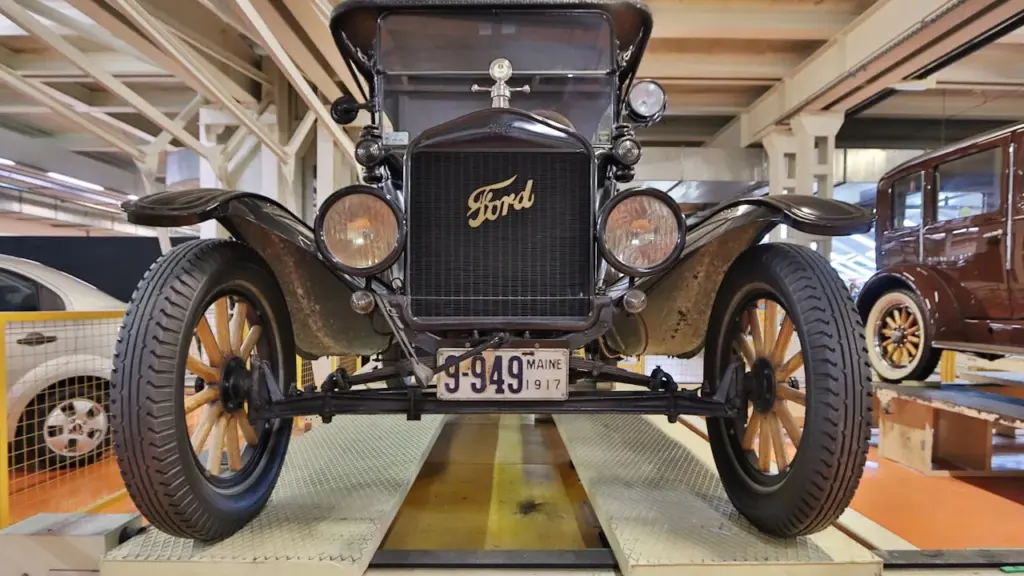
Ford is one of the largest manufacturers on the planet, with the engineering depth and budget to fix almost any mistake given enough time. So when news broke this week that the company has spent the last three years quietly rehiring over 300 experienced engineers after its AI-led quality systems fell short, it’s worth pausing on. If Ford can get this wrong, it’s worth asking how an SME with a fraction of the resources might get it wrong faster and find it far harder to put right.
What actually happened
Ford had been leaning increasingly on automated quality systems to catch design and manufacturing faults, a sensible-sounding move given the cost and productivity gains AI promises. The problem was that the company had also let go of many of its most experienced engineers, the ones who had spent decades learning where things go wrong on a production line and why.
According to Ford’s own executives, that was the mistake. The AI tools were fed design requirements and specifications, but specifications alone don’t capture the kind of judgement an experienced engineer builds up over years of catching failures before they happen. Without that knowledge feeding into the system, the AI missed problems the old quality inspectors would have caught instinctively.
The result was a string of costly recalls and rising warranty bills. Ford’s response wasn’t to scrap the AI but to bring back the people, referred to internally as “grey beard” engineers, and use them to train the AI tools and the younger staff working alongside them. The payoff has been significant: Ford has just topped the JD Power Initial Quality Study for the first time in sixteen years, and its leadership has credited the change with hundreds of millions of dollars in reduced recall and warranty costs.
Why this matters for smaller businesses
It’s tempting to read this story as proof that AI doesn’t work, or conversely as proof that it does once you “do it properly”. Neither reading is quite right. The real lesson is narrower and more useful: AI is only as good as the judgement behind it, and removing that judgement to save money is a false economy that often doesn’t show up until later, when it’s expensive to reverse.
For an SME, this risk is sharper than it was for Ford. A large manufacturer can absorb three years of rising warranty costs while it works out what went wrong. A smaller business usually can’t. If you cut an experienced member of staff and lean on a tool to fill the gap, you may not get a clean signal that something has gone wrong. Quality might simply drift, customers might quietly stop returning, and by the time the pattern is obvious, the person who could have fixed it may be long gone and difficult to bring back.
A more useful way to think about AI in your business
The question worth asking isn’t “can AI do this job instead of a person?” It’s “which parts of this job genuinely need supervision and correction, and who is doing that supervising?” Some tasks are safe to hand over outright: repetitive, well-defined, low-stakes work where mistakes are cheap and easy to spot. Others, particularly anything touching quality, safety, client relationships, or judgement calls built on experience, need someone in the loop who actually understands what good looks like.
Practically, that means a few things worth checking in your own business:
Before automating a function, ask who currently holds the knowledge that makes that function work well and whether that knowledge has ever been written down or passed on. If the answer is “It’s all in someone’s head”, automating around them is far riskier than it looks.
Keep your most experienced people closest to your highest-stakes decisions, even if AI is doing more of the day-to-day volume. Their value isn’t necessarily in doing the work anymore; it’s in catching what the AI gets wrong.
Build in a cheap way to pressure-test AI output before you trust it unsupervised. Ford effectively learnt this the expensive way, through recalls. A simple periodic review by someone experienced is a far cheaper version of the same check.
FAQ
Will AI eventually replace the need for experienced staff altogether? Not in roles where judgement, context, and accumulated experience matter. Ford’s case shows that AI tools are only as good as the knowledge fed into them. Experienced staff are what makes that knowledge legible to the system. Without them, the AI is essentially guessing within a narrow set of rules.
Is this just a manufacturing problem, or does it apply to service businesses too? It applies across sectors. Any business function that relies on nuanced judgement, client relationships, or pattern recognition built up over years carries the same risk. An AI can process data and follow rules; it struggles to replicate what a senior adviser, account manager, or specialist knows instinctively.
So should SMEs hold off on adopting AI until it improves? No. The right approach is to be deliberate rather than cautious. Identify which tasks are genuinely routine and low-stakes, and automate those with confidence. Keep experienced people involved in anything where mistakes are costly, hard to spot, or slow to surface. Ford’s problem wasn’t using AI, it was removing the human check on AI output.
How do I know which parts of my business are safe to automate? A useful test: if a new starter with no experience could review the AI’s output and spot a mistake, it’s probably safe to automate. If it would take someone with years of specific knowledge to know whether the output is right or wrong, that function still needs a human in the loop.
What if I can’t afford to keep experienced staff in every area? Then prioritise ruthlessly. Identify your highest-risk functions, the ones where an unnoticed error causes the most damage, and make sure experienced oversight is concentrated there. Lower-risk, more routine work is where you free up capacity through automation.
Is there an easy way to pressure-test AI tools before trusting them unsupervised? Yes. Run the AI output alongside human output for a defined period and compare the two. Any gaps or errors the AI produces that a person would have caught tell you where human oversight still needs to sit. It doesn’t need to be complex or expensive; it just needs to happen before you remove the safety net.
The bottom line
Ford’s story isn’t a cautionary tale about AI failing. It’s a cautionary tale about removing the people who make AI work and then being surprised when it doesn’t. For SMEs weighing up where AI fits into their operations, the safest approach isn’t to avoid it, and it isn’t to hand everything over either. It’s to be deliberate about which decisions still need a human holding the line and to make sure that person is still there when you need them.