
TL;DR UK e-commerce relies on passive shopfronts with low (1-3%) conversion rates. Conversely, East Asian live shopping uses video, chat, and instant checkout to drive 20% conversions and slash returns by 40%. UK retailers must adopt active, live selling to protect margins.
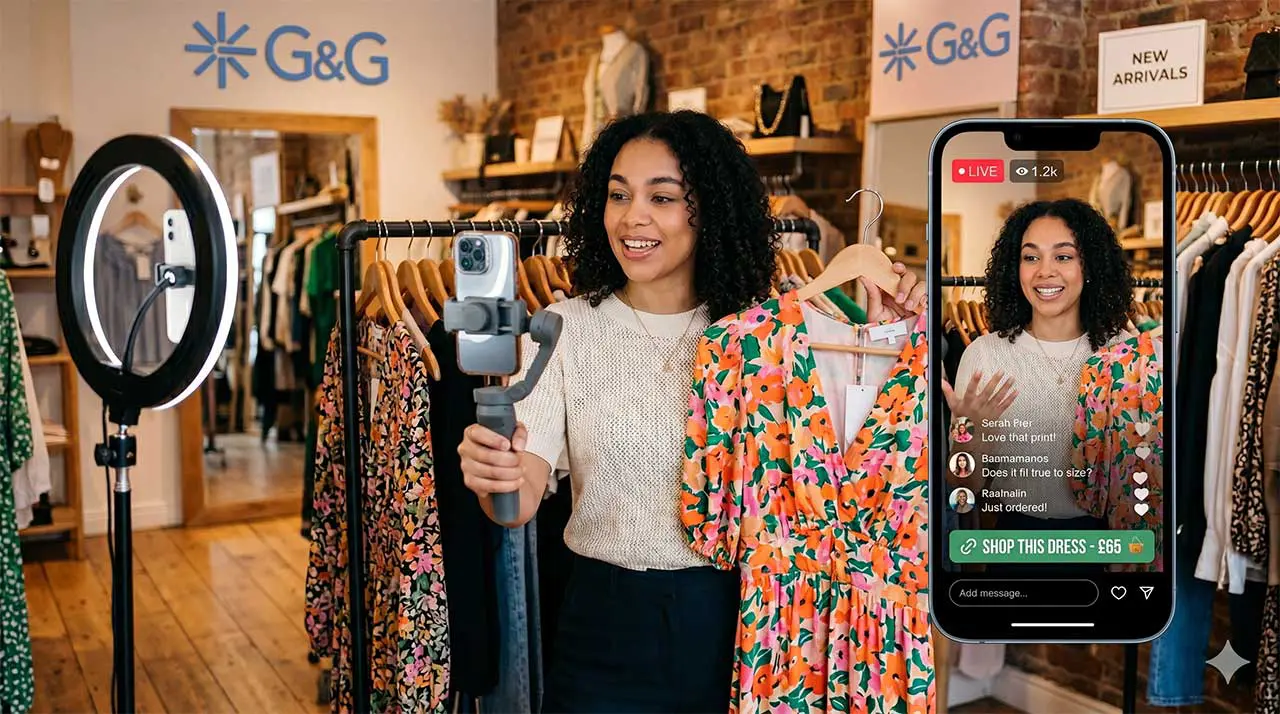
A standard plug-and-play live shopping setup: bridging the gap between the shop floor and digital checkout using just a smartphone
Most British online retailers treat a 2% conversion rate as an acceptable benchmark of digital success. They build an online shop, pay tech giants for ad traffic, and wait for visitors to browse static product listings in complete silence. It is a lonely, uninspiring way to buy things.
Meanwhile, East Asian retail moved past this model years ago. In China, livestream shopping has evolved from an experimental marketing gimmick into a mature, multi-billion-pound pillar of the digital economy. By fusing real-time video entertainment, direct community interaction, and single-tap checkout into a single event, Chinese platforms routinely see conversion rates hitting closer to 20%.
If your UK business is still fighting for that standard 2% conversion rate, you are competing in the wrong decade. This is not a trend to watch for the future; it is a fundamental shift in consumer behaviour that is happening right now.
What is Live Shopping?
Do not confuse live shopping with the outdated television shopping channels of the nineties. This is not QVC with a mobile app.
Live shopping, or livestream commerce, is a dynamic, interactive digital broadcast hosted directly on an e-commerce website or a social commerce platform. A host, who could be the business owner, a knowledgeable staff member, or a brand ambassador, showcases products in real-time. They try on clothes, demonstrate gadgets, or test skincare products under live studio conditions.
The critical difference lies in the frictionless nature of the transaction. As the host talks, clickable product tags pop up on the viewer’s screen. The audience can ask questions in the live chat—“Is that jacket waterproof?” or “Can you show the stitching on the strap?”—get an immediate response and purchase the exact item with a single tap without ever pausing the video feed. It bridges the gap between the immediate convenience of digital retail and the personal, high-trust touch of a physical shopfront.
Why China is Years Ahead of the Game
To understand where Western retail is going, you have to look at where China is right now. The Chinese livestream economy is projected to hit trillions of yuan in market value. Platforms like Taobao Live and Douyin (the domestic counterpart to TikTok) do not treat live commerce as an add-on; it is the core engine of their retail strategies.
China is years ahead of the UK for three specific reasons:
1. Unified Technological Infrastructure
In the UK, the digital journey remains fragmented. A consumer sees an ad on social media, clicks a link, is redirected to an external browser, enters their credit card details, and completes the purchase. In China, the entire ecosystem is unified. Social media, entertainment, high-speed mobile networks, and instant digital wallets work together seamlessly. There is zero friction between discovery and ownership.
2. Cultural Maturation and Professionalism
In the West, live video is often treated casually. In China, live shopping is a highly professionalised industry. Top hosts operate out of advanced studio facilities backed by data analysts, scriptwriters, and supply chain experts. It is a legitimate career path and a primary sales channel for everything from high-street fashion to luxury vehicles and fresh groceries.
3. Entertainment-Led Buying
Western e-commerce is entirely transactional: you need an item, you search for it, you buy it, you leave. Chinese consumers use live commerce for entertainment. They tune in to watch hosts they trust, participate in the community chat, and discover products they did not even know they wanted. The purchase is a natural byproduct of the entertainment.
The Hard Business Benefits for UK Retailers
Adopting this model is not about looking modern or chasing a superficial digital trend. For an SME director or manager navigating a challenging UK retail climate, it is about protecting margins and driving profitable growth.
Implementing a dedicated live commerce strategy on your website delivers three undeniable operational benefits:
1. Skyhigh Conversion Rates
As noted, standard e-commerce conversions hover between 1% and 3%. Live shopping events routinely achieve conversion rates of 20%. Why? Because it eliminates the hesitation phase of online shopping. The combination of live product demonstrations, real-time QA, and limited-time discount incentives creates an immediate, high-intent buying environment that static web pages simply cannot replicate.
2. Radical Reductions in Product Returns
Returns are the silent killer of UK e-commerce margins, with some fashion and apparel sectors suffering from return rates as high as 40%. Traditional online shopping relies heavily on guesswork regarding sizing, fabric quality, and true colour. Because live shopping allows viewers to see the product on a real person from multiple angles and ask specific questions before tapping ‘buy’, returns drop by an average of 40%. Customers know exactly what is arriving in the post.
3. Exploiting the Psychology of FOMO
A static website allows a customer to add an item to a cart, abandon it, and think about it for three days. Live shopping introduces healthy urgency. Exclusive product drops, limited stock numbers, and live-only promotional codes leverage the Fear Of Missing Out (FOMO). It turns a standard purchase into a time-sensitive event, successfully driving impulse buying from highly engaged viewers.
Moving Beyond the Static Storefront
Getting your website ready for live shopping does not require a Hollywood production crew or a massive corporate budget. It requires a shift in mindset. It means viewing your website not just as a digital warehouse but as a live broadcast space where your team can actively sell, engage, and build genuine commercial trust in real-time.
The infrastructure is already available, with plug-and-play live video software integrating seamlessly into standard e-commerce platforms. The market appetite is there. The only question left is whether you will build the capabilities now or wait until your competitors force your hand.
Is your online business built for passive scrolling or active buying? Contact GG Worldwide today to discuss how we can help upgrade your digital infrastructure, optimise your e-commerce operations, and prepare your business for the high-margin world of livestream commerce.
Frequently Asked Questions
Do I need an expensive production studio to start?
No. The technology has matured significantly. Accessible, plug-and-play software plugins integrate directly into standard platforms like Shopify and WooCommerce, allowing SMEs to broadcast using basic smartphone setups and existing staff.
Why are Chinese retailers so far ahead in this space?
China has spent the last decade building a unified digital infrastructure. Unlike the fragmented Western journey (moving from an app to a browser to a separate payment gateway), East Asian platforms completely fuse social entertainment, logistics, and instant digital wallets into a frictionless ecosystem.
How does live video actually reduce product returns?
Returns are frequently caused by guesswork around sizing, fit, or material quality. Because a live host can manipulate the product, show details up close, and answer specific customer questions on the spot, buyers have highly accurate expectations before making a purchase.
The Bottom Line
Relying on a quiet, static website is an expensive way to run an online shop in 2026. Live shopping is not a passing digital trend; it is the structural future of online transactions. If you continue to wait for customers to passively browse your listings, you will keep settling for crumbs while forward-thinking competitors claim the market.
For practical support improving online sales and customer journeys, explore our E-Commerce Solutions service.